Game Boards
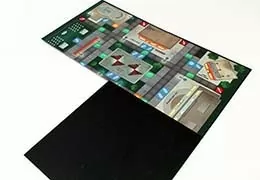
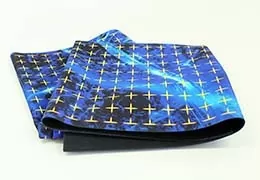
It’s not a board game without a board! Well, sort of — for those free-spirited designers we offer two alternative playing surfaces alongside the traditional option: playmats and tiles. Of course, boards are the most common playing surface. Select a category below to learn more about your playing surface options.
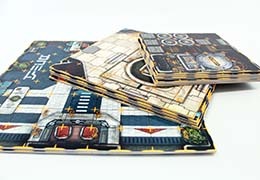
How Game Boards Are Made
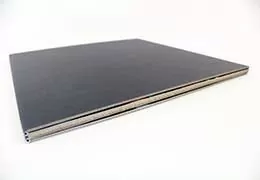
A folding game board is constructed from greyboard (also called chipboard) — a dense, rigid paperboard — wrapped with printed art paper and joined at the folds with fabric adhesive tape on the inner face, creating a flexible hinge.
Board Thickness
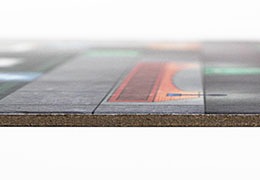
The greyboard thickness determines the board’s rigidity, weight, and premium feel:
| Thickness | Grade | Notes |
|---|---|---|
| 1.5 mm | Standard | Common for lighter games and budget projects |
| 2.0 mm | Industry standard | The sweet spot — used by most published games |
| 2.5 mm | Premium | Noticeably heavier and more rigid |
| 3.0 mm | Ultra-premium | Maximum rigidity; popular as a Kickstarter stretch goal |
Board thickness is measured following TAPPI T 411 (thickness/caliper of paper and paperboard) or the international equivalent ISO 534:2011. The wrap paper is typically 157 gsm C2S (Coated 2 Sides) art paper, with 128 gsm as a budget alternative.
Fold Types
The fold configuration determines how large your board can be while still fitting in a standard game box:
| Fold Type | Panels | Best For |
|---|---|---|
| Bi-fold | 2 | Simplest and lowest cost. Good for smaller boards up to ~20″x10″ folded. |
| Tri-fold | 3 | Z-fold or letter-fold. Creates a rectangular playing surface. |
| Quad-fold | 4 | The most common configuration for standard square boards. Folds to quarter size. |
| Six-fold | 6 | For large boards up to ~22″x34″ unfolded. Common in Euro-style games. The 2mm greyboard minimum is especially important here due to stress on fold seams. |
Surface Finishes
The finish on your game board affects both aesthetics and durability:
| Finish | Look & Feel | Durability |
|---|---|---|
| Gloss lamination | Reflective, vibrant colors | High — resists fading, water, and scratching |
| Matte lamination | Soft touch, reduced glare | Good — colorfast and waterproof, but can show scuff marks |
| Linen texture | Cross-hatch tactile pattern | Good — the texture helps hide minor wear |
| UV coating | Glossy, thinner than lamination | Moderate — adequate for lighter-use games |
The linen finish is applied by pressing the printed sheet against steel press plates that replicate a cross-hatch fabric pattern. It gives game boards a classic, tactile quality and is the same texture used on most commercial playing cards to improve airflow during shuffling.
Safety Standards for Game Boards
Board games sold as toys are subject to safety regulations in all major markets:
United States
ASTM F963-23 is the mandatory toy safety standard for children’s toys under 14, required under the Consumer Product Safety Improvement Act (CPSIA). It covers mechanical hazards, flammability, and chemical safety. Game boards made from standard greyboard with conventional CMYK inks generally fall within safe material limits, but games with small loose components (tokens, dice, miniatures) must be tested for choking hazards per 16 CFR 1501.
The CPSC’s Toy Safety Business Guidance is the best starting point for understanding your compliance obligations.
European Union
The EN 71 standard series applies to all toys sold in the EU, covering mechanical properties (EN 71-1), flammability (EN 71-2), and migration of heavy metals from printed surfaces (EN 71-3). Products must carry the CE marking.
The EU’s new Toy Safety Regulation (EU) 2025/2509, applicable from August 2030, will add a Digital Product Passport requirement.
Industry Resources
- Game Manufacturers Association (GAMA) — The tabletop game industry’s non-profit trade association since 1977. Runs GAMA Expo and Origins Game Fair.
- SPIEL Essen — The world’s largest board game fair, held annually in October in Essen, Germany. 948 exhibitors and 220,000 attendees in 2025.
- ICTI Ethical Supply Chain Program — Factory certification for ethical manufacturing practices, covering labor, safety, and environmental compliance.
If you’re interested in reading more about custom game printing, be sure to check out our custom board game hub and our custom card game hub. These parts of our site contain all the information you need to know about creating a board game or a card game — beyond just the standards listed here, these hubs also contain detailed information on all the types of materials and packaging types we offer for your game.