Tuck Box Packaging
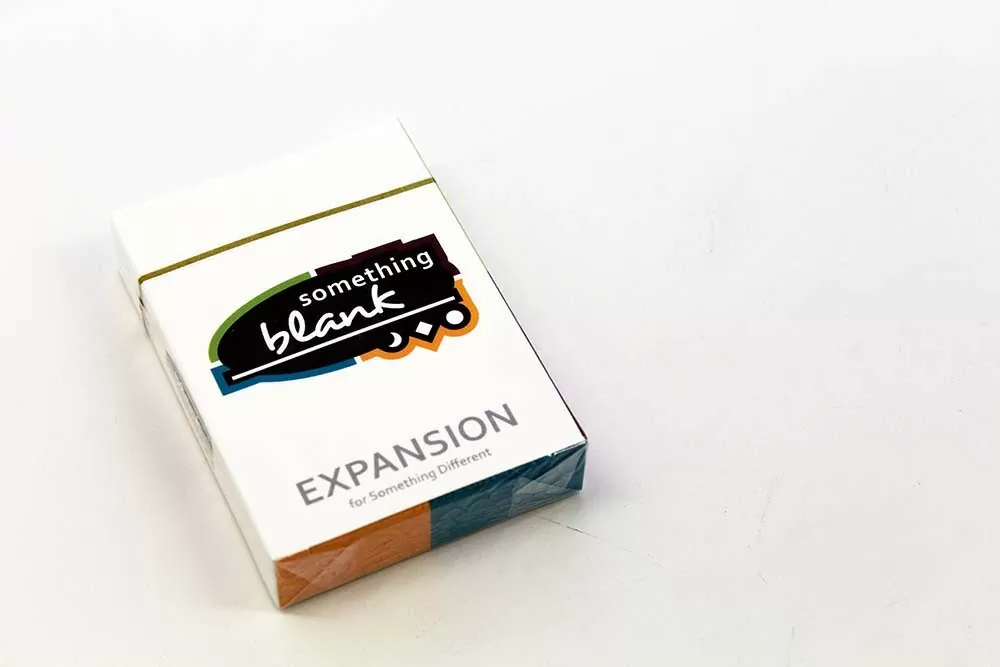
Tuck Box Card Game Packaging
A tuck box is the traditional card game packaging option, made by folding thick paper stock into a box with a flap top. Our tuck boxes can hold up to 110 cards in a single deck or 220 cards in two decks side by side, and can be fitted with an instruction booklet or sheet. If your game requires more cards we suggest using a two-piece box for better durability.
The minimum card requirement for tuck box packaging is 26 cards. However — if your game has less than 26 cards and you would like them packaged in a tuck box, we can work with that, but a cardboard insert will need to be included with the cards inside the tuck box:

Please note: you will need to reach out to customer service when placing your order if you decide to go this route, as this will require custom quoting.
How Tuck Boxes Are Made
A tuck box is a type of folding carton — a flat sheet of paperboard that is die-cut, scored, and folded into a box shape. The design of the tuck box is governed by its die line (also called a dieline): a technical drawing that shows exactly where the material is cut, folded, and glued.
The European Carton Makers Association (ECMA) maintains an international catalog of folding carton structures using an 8-digit alphanumeric code system. The standard tuck box falls under ECMA Code A20.20 — a rectangular folding box with tuck-in flap closure on both lid and base. The Paperboard Packaging Council (PPC) in the U.S. publishes a 340-page Paperboard Packaging Design Handbook with over 700 carton style illustrations.
Tuck Box Styles
Not all tuck boxes are identical. The main structural variations include:
| Style | Description | Best For |
|---|---|---|
| Straight Tuck End (STE) | Both flaps tuck front-to-rear. No raw edges visible on front panel. | Standard card games — cleaner, more premium look |
| Reverse Tuck End (RTE) | Top tucks rear-to-front, bottom front-to-rear. More material-efficient. | Budget-conscious projects |
| Auto-Lock Bottom | Bottom self-forms when opened; tuck flap on top only. Supports heavier contents. | Games with many cards or mixed components |
| Snap Lock Bottom | Interlocking bottom flaps snap together. Stronger than standard tuck. | Heavy card decks |
Key die-cut features to know about:
- Dust flaps — Small side flaps that close before the tuck flap, keeping contents clean
- Cherry lock / friction lock — A tab on the tuck flap that catches inside the box, keeping it closed
- Thumb notch — A semicircle cut in the front panel for easy opening
Tuck Box Materials
We offer two tuck box materials: card stock and plastic.
Card Stock
Our card stock tuck boxes are made of 16 pt stock — that’s 0.016 inches (0.406 mm) thick, measured in the caliper/point system standard to the North American paperboard industry (1 point = 0.001 inches).
This is typically SBS (Solid Bleached Sulfate) board — virgin fiber, bleached, and clay-coated on one side (C1S) for a bright white printing surface. SBS is the premium grade for folding cartons, offering excellent print reproduction and structural integrity.
Plastic
For orders over 5,000 units, we also offer a plastic tuck box. This option looks sleek and is more durable than a paper tuck box. The preferred material is PET (Polyethylene Terephthalate), which is clear, shatterproof, and fully recyclable (#1 plastic). PVC, while historically common, is being phased out by many brands due to environmental concerns.
What Can You Put in a Tuck Box?
Tuck boxes can hold more than just cards, making games more travel-efficient. If your game has several small components — dice, tokens, standees — you can include them in the tuck box packaging. This makes tuck boxes especially practical for compact, portable games.
Retail Packaging Requirements
If you plan on selling your game to retailers, there are a few additions to consider:
Hang tabs (euro slots): Adding a hang tab to your tuck box allows retailers to hang your game on a peg wall. The standard euro slot dimensions are 32 x 6.5 x 9 mm, as specified by DIN EN 13010. Placement is typically 5–10 mm below the top edge of the package.
Barcodes: You’ll need a UPC/EAN barcode for retail sales. The GS1 symbol placement guidelines recommend the lower right of the back panel with adequate quiet zones (clear space around the barcode). Never place barcodes across seams, curves, closures, or package flaps.
Specialty options like foil stamping, embossing, and spot UV will also help your packaging stand out on retail displays.
Safety and Compliance
If your card game is intended for children, packaging must comply with relevant safety standards:
- ASTM F963-23 — The mandatory U.S. toy safety standard (required under CPSIA) for toys intended for children under 14. Annex A2 covers packaging and shipping requirements.
- Small parts warnings — Per 16 CFR 1500.19, games with small parts for ages 3–6 must carry: “WARNING: CHOKING HAZARD — Small parts. Not for children under 3 yrs.”
- EN 71 — Required for toys sold in the EU. Covers mechanical safety, flammability, and chemical migration from printed surfaces.
For a thorough overview, the CPSC’s Toy Safety Business Guidance is the best starting point for U.S. manufacturers and importers.
Sustainability
Paperboard tuck boxes are inherently more recyclable than plastic packaging. For projects where environmental certification matters, look for FSC (Forest Stewardship Council) or SFI (Sustainable Forestry Initiative) certified stock, which ensures the fiber comes from responsibly managed forests with a verified chain of custody.
One thing to be aware of: if your tuck box has a film lamination (gloss or matte plastic film), the laminate can contaminate paper recycling streams. Aqueous coating is a recyclable alternative that still provides surface protection, though it won’t match the durability or feel of lamination.