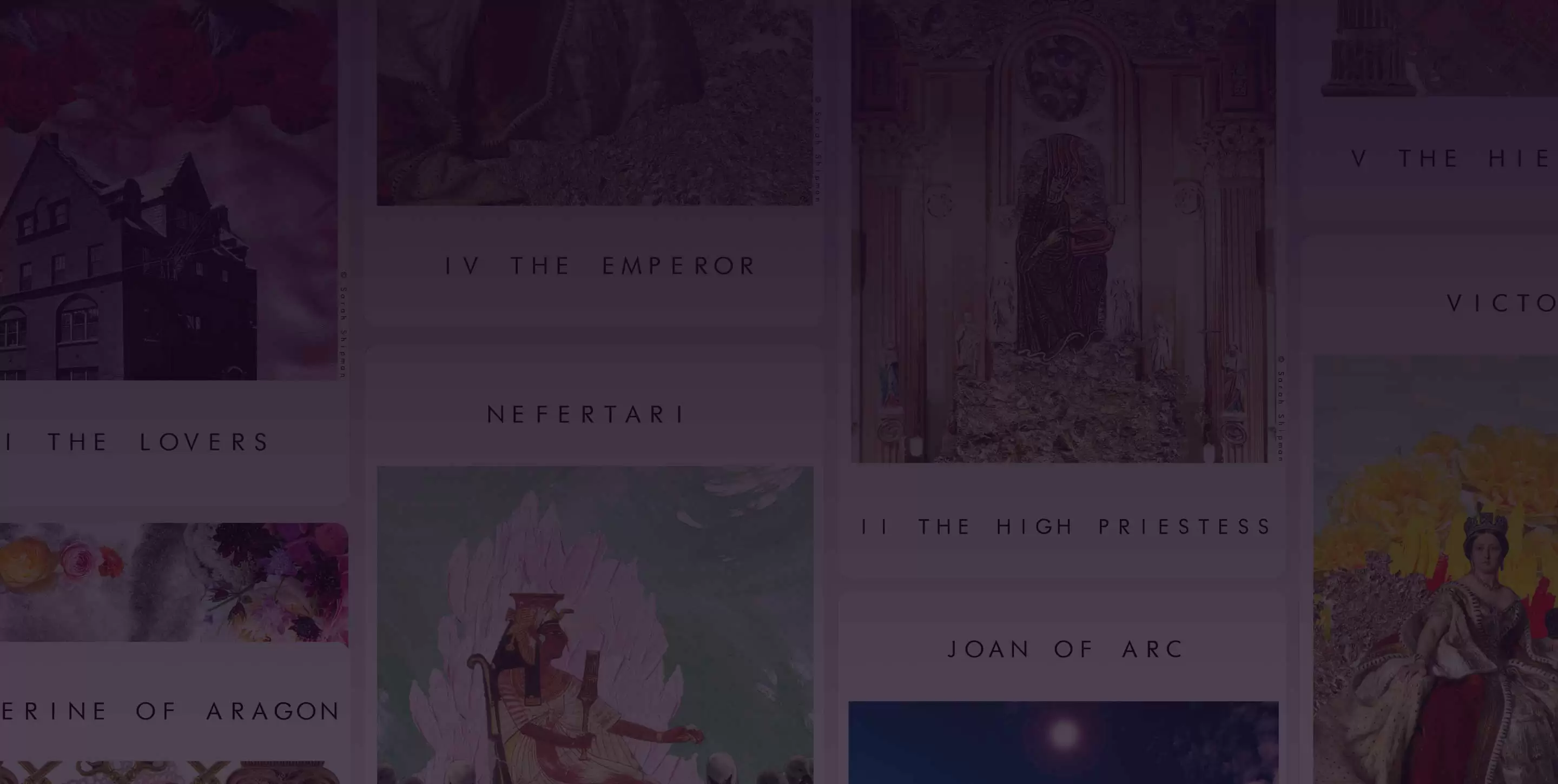
Custom Tarot Card Printing
Professionally print your custom tarot cards with PrintNinja and let our expert customer service team guide you through the entire printing process. With a minimum order of just 500 decks, PrintNinja is a great fit for independent creators and small to medium-sized businesses.
Open our online quoting calculator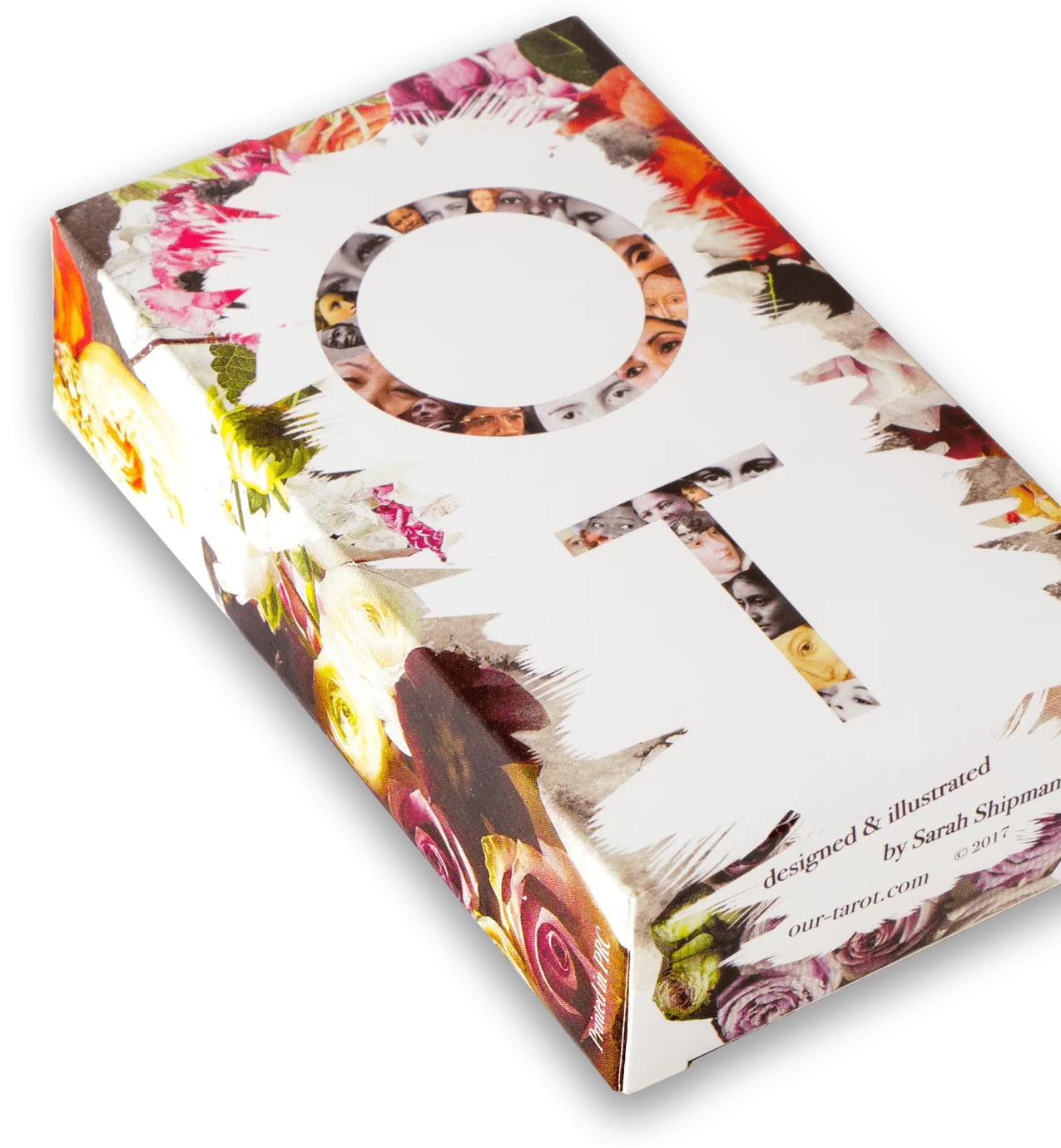
Understanding Tarot Deck Structure
A traditional tarot deck contains 78 cards divided into two groups. The Major Arcana consists of 22 unique cards — The Fool, The Magician, The High Priestess, and so on — each requiring its own distinct illustration. The Minor Arcana has 56 cards organized into four suits (traditionally Wands, Cups, Swords, and Pentacles), each with 14 cards: Ace through 10, plus Page, Knight, Queen, and King.
Most published decks also include a title card, one or two instruction cards, and a blank replacement card, bringing the total to 80–82 cards. These extras are printed on the same press sheet as your game cards, so adding a few has minimal cost impact.
Not making a traditional tarot deck? Oracle decks are freeform — any number of cards, any theme, no required structure. We print oracle decks using the same process and materials as tarot. The standard tarot card size (2.75″ × 4.75″) works for both.


Cardstock Options for Tarot
The cardstock you choose directly affects how your deck feels in the hand — and for tarot, the tactile experience matters. Readers shuffle constantly, and collectors judge quality by feel.
Blue Core Standard (280 GSM) is the industry standard for playing cards and tarot decks. The blue-dyed inner layer prevents light from passing through the card, which is essential for tarot where seeing the next card would undermine the reading. This is what most professional tarot publishers use, and it meets the opacity standards set by major card manufacturers like the United States Playing Card Company.
Black Core (300/310 GSM) is the premium option — thicker, with a black-dyed core for maximum opacity. The extra weight gives the deck a luxurious feel that collectors appreciate. If you’re positioning your deck as a limited edition or premium product, black core is worth the investment.
Linen Texture adds a crosshatch pattern to the card surface. This gives cards a distinctive feel and helps hide minor scratches and fingerprints over time — a practical benefit for decks that see heavy use.
Coreless Standard is a budget-friendly option without a colored inner core. Suitable for prototypes, but we generally don’t recommend it for finished tarot products since light bleed-through can be an issue.
To feel these cardstocks in person, order a sample pack.
Finish and Lamination
All of our cards receive lamination on both sides to protect the printing and improve durability. The choice is in what type:
Gloss lamination makes colors pop and gives the deck a vibrant, polished appearance. It’s the most popular choice for decks with rich, detailed artwork. Gloss cards slide smoothly against each other, making shuffling easy.
Matte lamination produces a softer, more muted look that many tarot creators prefer for its understated elegance. Matte cards have slightly more grip, which some readers prefer for laying out spreads. Matte also reduces glare, making artwork easier to read in bright lighting.
Spot UV can be applied selectively over a matte-laminated card to highlight specific design elements — for example, making gold details glossy while the background stays matte. This creates a striking contrast that elevates the perceived value of the deck. Learn more about spot UV.
Packaging Your Tarot Deck
Tarot decks are larger than standard poker decks (2.75″ × 4.75″ vs. 2.5″ × 3.5″), and with 78+ cards the deck is thick. Standard poker tuck boxes won’t work — you need packaging specifically sized for tarot.
Tarot tuck box: Custom-printed, sized to fit a 78-card deck. The most economical option, and you can add foil stamping or embossing to the box.
Two-piece rigid box: A lift-top box with separate lid and base, like high-end retail packaging. This is the premium choice — it protects cards better and signals quality. Many Kickstarter-funded tarot decks use two-piece boxes because backers expect a premium unboxing experience.
Magnetic closure box: A rigid box with an integrated magnetic flap. The premium feel of a two-piece box with the convenience of a single-piece design.
Shrink wrap: All packaging can be shrink wrapped for retail-ready presentation. We recommend it for any deck sold through retail channels or fulfilled through Amazon.
Companion Guidebook
Many tarot decks ship with a companion guidebook explaining each card’s meaning, suggested spreads, and the artist’s creative vision. PrintNinja can produce the guidebook alongside your cards for streamlined production and shipping.
Common guidebook specs:
- Size: 3″ × 5″ or 4″ × 6″ to fit inside your packaging
- Page count: 40–120 pages depending on detail level
- Binding: saddle-stitched for thinner guides, perfect-bound for comprehensive ones
- Paper: 128 GSM matte art paper is the most popular choice
For tarot decks, a guidebook is strongly recommended — buyers expect it. For oracle decks, it depends on your concept, but if each card has a specific meaning, a guidebook adds significant value.

File Setup for Tarot Cards
Tarot cards use a finished size of 2.75″ × 4.75″ (70 mm × 121 mm). When preparing your artwork files, keep these specifications in mind:
| Specification | Requirement |
|---|---|
| Finished size | 2.75″ × 4.75″ (70 × 121 mm) |
| Bleed | 3 mm (0.118″) on all sides |
| Safe zone | Keep critical content 5 mm (0.197″) from cut edge |
| Resolution | 300 DPI minimum, CMYK color mode |
| File format | Print-ready PDF, one card face per page |
| Card backs | One file if uniform, labeled files if multiple back designs |
| Tolerance | ±1 mm trimming variance per ISO 19593-1 |
For templates and step-by-step instructions, see our card deck setup guides.
Tarot Deck Specs at a Glance
| Feature | Options |
|---|---|
| Standard card count | 78 cards (22 major + 56 minor arcana), plus optional title/instruction/replacement cards |
| Card size | 2.75″ × 4.75″ (70 × 121 mm) standard, or custom sizes available |
| Cardstock | Blue core 280 GSM, black core 300/310 GSM, linen texture, coreless |
| Finish | Gloss or matte lamination, optional spot UV |
| Packaging | Tarot tuck box, two-piece rigid box, magnetic closure box, shrink wrap |
| Extras | Foil stamping, embossing, metallic ink, companion guidebook, custom card shapes |
| Minimum order | 500 units |
| Turnaround | ~4 weeks production + shipping |
Why Print with PrintNinja?
Premium Printing for Self-Publishers
Every project is printed and bound with the best materials by experienced professionals. Our dedicated teams in the US and China work with the same factories as top-notch publishing companies.
Read Our Five-Star Reviews
Discover why hundreds of customers have trusted PrintNinja. Our references prove that people love working with us.
Reliable Customer Service
With years of experience, our U.S. based customer service team serves a global audience and will lead you through the printing process step by step. We value clear communication, and we're always available to answer your questions.
Premium Printing at an Affordable Price
Sell your project at increased profits without sacrificing quality. Save with our low per-unit costs.

Print Your Custom Tarot or Oracle Cards
Customize every aspect of your cards. Create unique card shapes, from large to small. Select your card stock core and finish style. Explore our specialty printing options like foil stamping and spot UV.
Showcase Your Designs with Professional Packaging
Design specialty features that set your cards apart and showcase your artwork. Top it off with durable, custom-printed packaging — from tuck boxes to two-piece rigid boxes.

Frequently Asked Questions About Custom Tarot Printing
How much does it cost to print a custom tarot deck?
The cost depends on card count, cardstock, finish, packaging, and order quantity. A standard 78-card tarot deck with blue core cardstock, gloss lamination, and a tuck box typically runs a few dollars per unit at quantities of 500+. Adding premium options like black core, spot UV, or a two-piece box increases the per-unit price. Get an instant quote with our online calculator.
What’s the difference between tarot cards and oracle cards?
Tarot decks follow a defined structure: 78 cards divided into major and minor arcana with specific suits and court cards. Oracle decks are freeform — any number of cards with any theme the creator chooses. Both are printed using the same process and materials. If you’re creating an oracle deck, the tarot card size (2.75″ × 4.75″) is the most popular choice, but you can use any of our custom card sizes.
Can I print fewer than 78 cards?
Yes. Many indie creators design oracle decks, affirmation decks, or other card-based products with anywhere from 30 to 120+ cards. Our pricing calculator supports any card count, and our team can advise on the most cost-effective configuration for your deck.
Do I need to include a guidebook?
For tarot decks, a guidebook is strongly recommended — buyers expect one. For oracle decks, it depends on your concept. If each card has a specific meaning or prompt, a guidebook adds significant value. PrintNinja can print your guidebook alongside your cards and package everything together.
Which cardstock should I choose for tarot?
Blue core 280 GSM is the industry standard and what we recommend for most projects. It provides the right balance of snap, opacity, and durability. Choose black core if you want a premium, heavier deck. Add linen texture if you want a distinctive feel that also hides wear over time. Order a sample pack to feel the difference in person.
How do I set up my tarot card artwork?
Submit print-ready PDFs in CMYK color mode at 300 DPI. Each card face should be a separate page. Include 3 mm bleed on all sides and keep important content 5 mm from the cut edge. Name your files clearly (e.g., “01-The-Fool.pdf”, “02-The-Magician.pdf”). For full details and downloadable templates, see our card deck setup guides.
Can I add foil stamping to my tarot cards?
Yes — foil stamping is one of the most popular specialty options for tarot decks. Gold or silver foil on card backs, borders, or key design elements adds a premium look that collectors love. Foil can also be applied to your packaging. Learn about our foil stamping process.
Freshly updated customer reviews from TrustPilot
Get to know PrintNinja
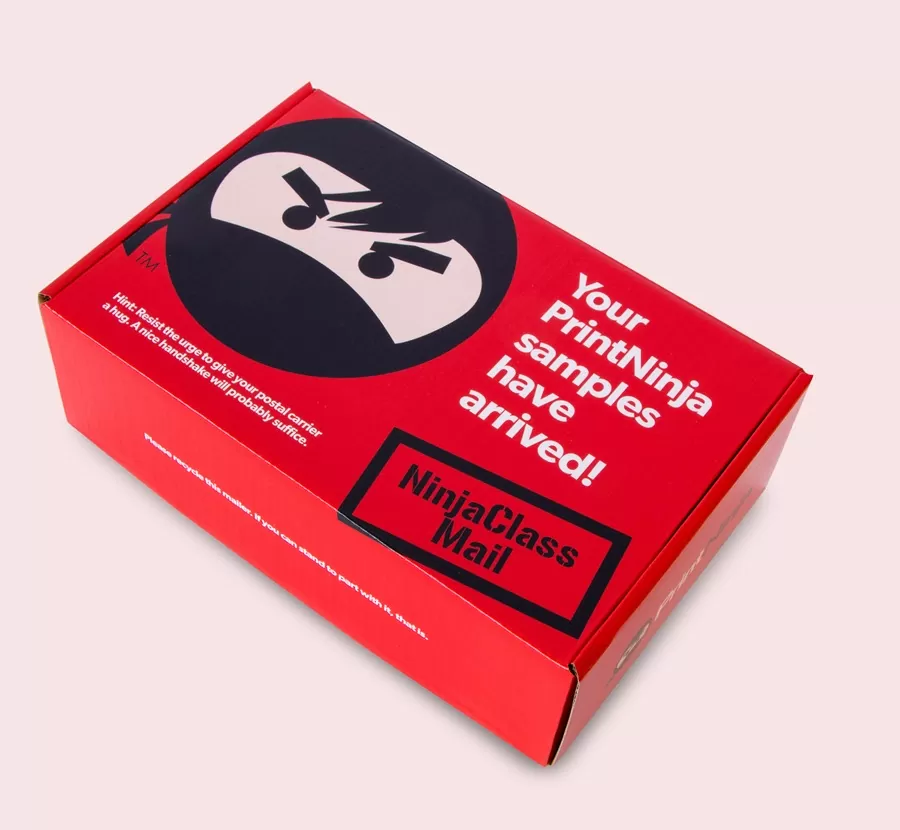
Order a Sample Pack to get paper samples, printing tips, and samples of our work. Take the mystery out of the jargon and get comfortable with the printing process.
The PrintNinja Standard Sample Pack includes:
- Complete collection of our paper types
- Hands-on examples of paper coatings and finishes
- Printed samples of specialty add-ons
- Foil stamping color options
- Need-to-know file setup tips
- Walkthrough of our customer-friendly services
Explore our full range of sample packs using the button below.
Explore sample packs