
Custom Zine Printing
Self-publish your zine with professional offset printing. From art zines and poetry chapbooks to convention-ready mini comics, we print small-format publications in quantities of 500+ with the paper, binding, and finishing options that match your creative vision.
Get an Instant Quote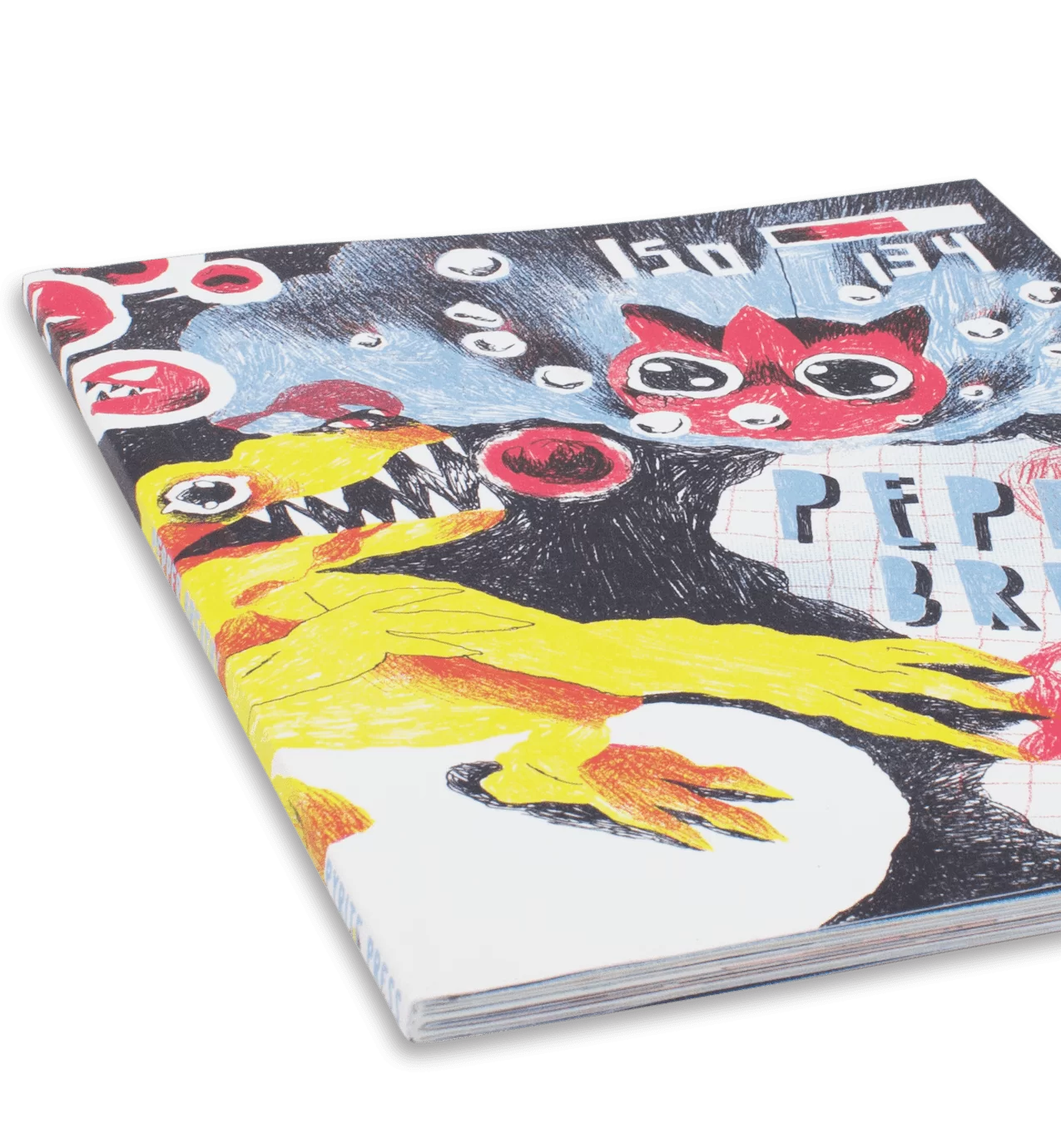
What Our Customers Say
Why Offset Printing for Zines?
Zines have always been about direct creative expression — but that doesn’t mean they have to look like they came out of a copy shop. Once you’re printing 500 or more copies, offset lithography costs less per unit than digital printing and delivers noticeably better results: richer ink coverage, sharper line art, and consistent color from the first copy to the last.
Offset also gives you access to paper stocks and finishing options that digital printers simply can’t offer. You can choose uncoated paper for that raw, tactile zine feel, or go with coated stock for vibrant full-color photography and illustration. Either way, your zine gets the production quality of a professionally manufactured publication while keeping the creative freedom that makes zines what they are.
Zine Formats We Print
| Format | Trim Size | Notes |
|---|---|---|
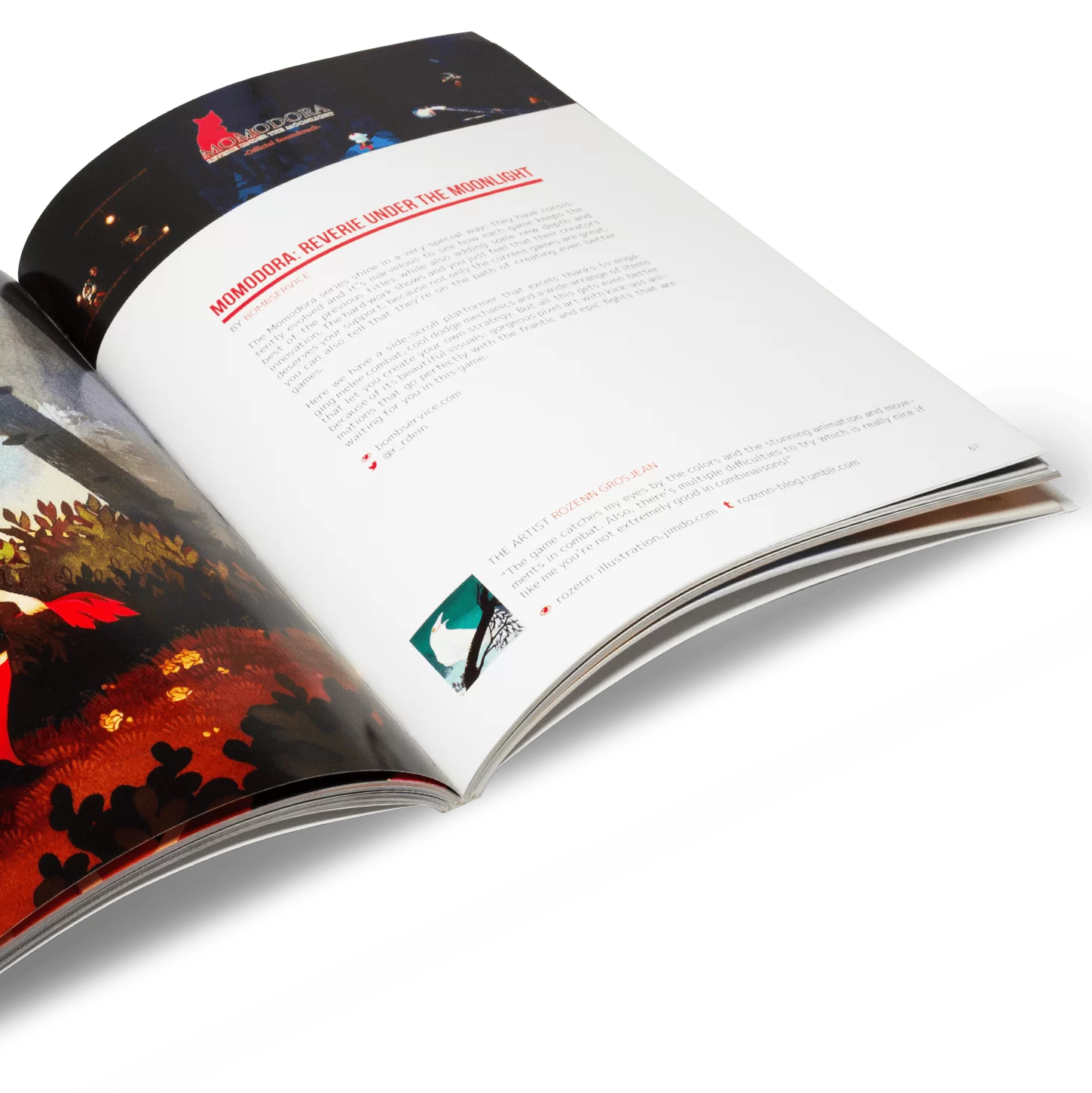
| Art zines (half-letter) | 5.5″ × 8.5″ | The most popular zine size — fits in a back pocket or mail envelope |
| Mini zines (quarter-letter) | 4.25″ × 5.5″ | Compact format for poetry, illustration, and convention handouts |
| A5 zines | 5.8″ × 8.3″ | International standard, slightly narrower than half-letter |
| Full-size zines | 8.5″ × 11″ | Magazine-sized, ideal for photo zines and art portfolios |
| Square zines | 6″ × 6″ or 8″ × 8″ | Distinctive format for photography and visual art |
| Comic zines | 6.625″ × 10.25″ | Standard comic book trim for narrative and sequential art zines |
We also print custom sizes. If your zine doesn’t fit a standard format, we can accommodate your exact dimensions.
Paper Options
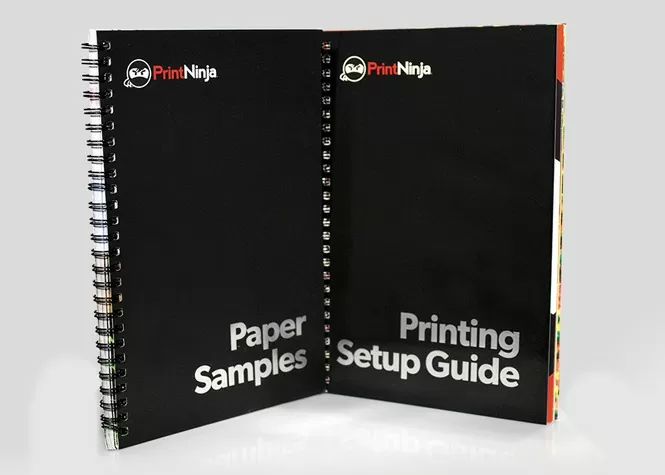
The paper you choose sets the tone for the entire zine — from raw and handmade to polished and gallery-ready.
- 80# gloss text — Smooth, bright surface that makes photos and full-color art pop. Best for photography zines and illustration-heavy projects.
- 80# matte text — Non-reflective surface with excellent color reproduction. Great for zines that mix text and images.
- 60# uncoated text — Lighter weight with a natural, textured feel. The classic zine paper — absorbs ink like newsprint but holds up far better.
- 70# uncoated text — A step heavier than 60#, with more body and opacity. Good for zines with double-sided printing.
Covers are typically printed on 80# or 100# cover stock with gloss or matte lamination to protect against handling at conventions and in retail.
Pro Tip
Uncoated paper gives zines an authentic DIY feel while still being professionally printed — it's the most popular choice among zine makers who want that handmade aesthetic without the inconsistency of photocopies.
Binding Options
Saddle Stitch
Stapled through the spine fold — the zine standard. Clean, thin profile that works perfectly for publications up to about 64 pages. Easy to stack, display, and mail.
Perfect Binding
Flat spine with a wraparound cover. Best for thicker zine anthologies, collected editions, and publications over 48 pages that need a bookshelf-ready look.
Spiral / Wire-O
Allows the zine to lie completely flat when open. Ideal for art zines, sketchbook-style publications, and any project where readers need to see the full spread.
Specialty Options
- Foil stamping — Metallic or matte foil on cover titles and artwork for a premium, collectible feel.
- Spot UV — Selective gloss coating that creates contrast and texture on matte laminated covers.
- French fold covers — A folded cover with printed interior flaps, adding thickness and a premium look to saddle-stitched zines.
- Custom sizes — Non-standard dimensions, die-cut shapes, and unusual formats.
- Belly bands & wraps — Printed paper bands that wrap around the zine for retail display, bundling, or limited-edition packaging.
Pro Tip
French fold covers are especially popular for premium zine editions — they add weight and a luxury feel to a saddle-stitched zine without increasing the page count or switching to perfect binding.
The PrintNinja Zine Process
- Get a quote — Use our instant online calculator to price your zine based on size, page count, paper, binding, and quantity.
- Upload artwork — Submit print-ready PDFs. Our prepress team reviews every file for bleed, resolution, color mode, and page order.
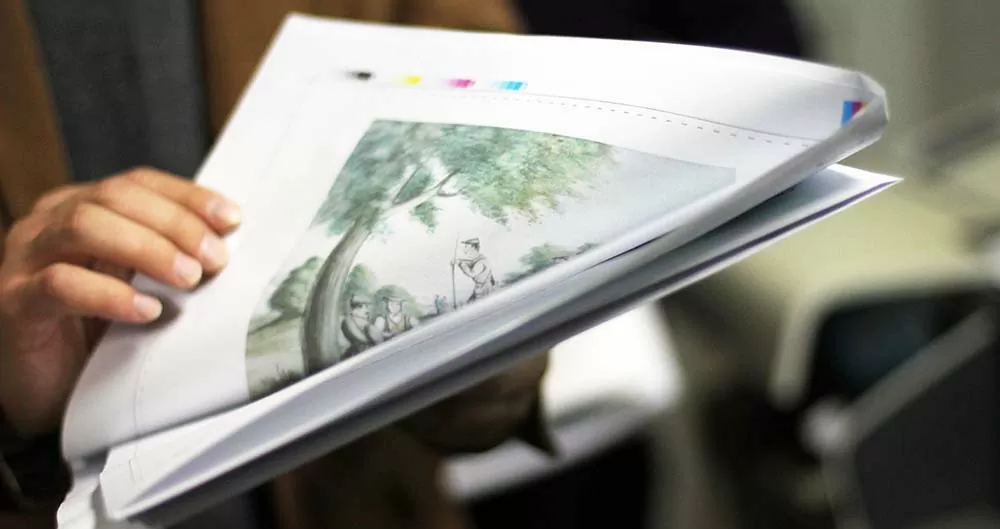
- Proof review — Approve a digital proof (or order a physical proof) to verify color, layout, and paper selection before production begins.
- Production — Your zine is printed, bound, trimmed, and packaged at our production facility using calibrated offset presses.
- Delivery — We ship to your door, your distributor, or directly to your convention booth. Free ocean shipping on most orders.
[ninja_call_to_action title="Planning your zine layout?" text="Our dimensions guide covers bleed setup, safe zones, and standard trim sizes for every zine format we print." action="Zine Dimensions Guide" link="/standard-magazine-dimensions/"]
Who Prints Zines with PrintNinja?

Artists & Illustrators

Writers & Poets

Convention Sellers

Small Publishers
Frequently Asked Questions About Zine Printing
What is a zine?
A zine (short for “magazine” or “fanzine”) is a small, self-published work — typically photocopied or printed in small runs. Zines cover everything from art and photography to poetry, personal essays, comics, and niche subcultures. They range from a few folded pages to 60+ page perfect-bound publications. The format has roots in punk and DIY culture but is now used by artists, writers, and brands across every creative field.
What size should my zine be?
The most common zine size is 5.5″ × 8.5″ (half-letter) — it’s easy to print, mail, and display. Mini zines at 4.25″ × 5.5″ are popular for conventions and handouts. For photo-heavy or portfolio-style zines, 8.5″ × 11″ gives your images more room. Choose a size based on how your zine will be read, sold, and shipped. See all standard zine dimensions.
What binding is best for zines?
Saddle stitch (stapled spine) is the standard for zines — it’s affordable, looks clean, and works for publications up to about 64 pages. For thicker zines or anthologies over 48 pages, perfect binding gives you a flat spine and a more bookshelf-ready appearance. Spiral or wire-o binding is ideal for art zines that need to lie flat. Compare binding types.
What is the minimum order quantity for zine printing?
Our minimum order is 500 copies. At this quantity, offset printing delivers significantly better quality and lower per-unit costs compared to digital printing or photocopying. Most zine creators order 500–2,000 copies to cover convention sales, online orders, and consignment at independent bookstores and shops.
How do I set up my zine files for printing?
Submit print-ready PDFs with 0.125-inch bleed on all sides. Each page should be a separate PDF page — do not submit as printer spreads. Use CMYK color mode at 300 DPI for color artwork, or 600 DPI for black-and-white line art. Keep critical text and images at least 0.25 inches from the trim edge. Read our zine setup guide.
Need Some Samples?
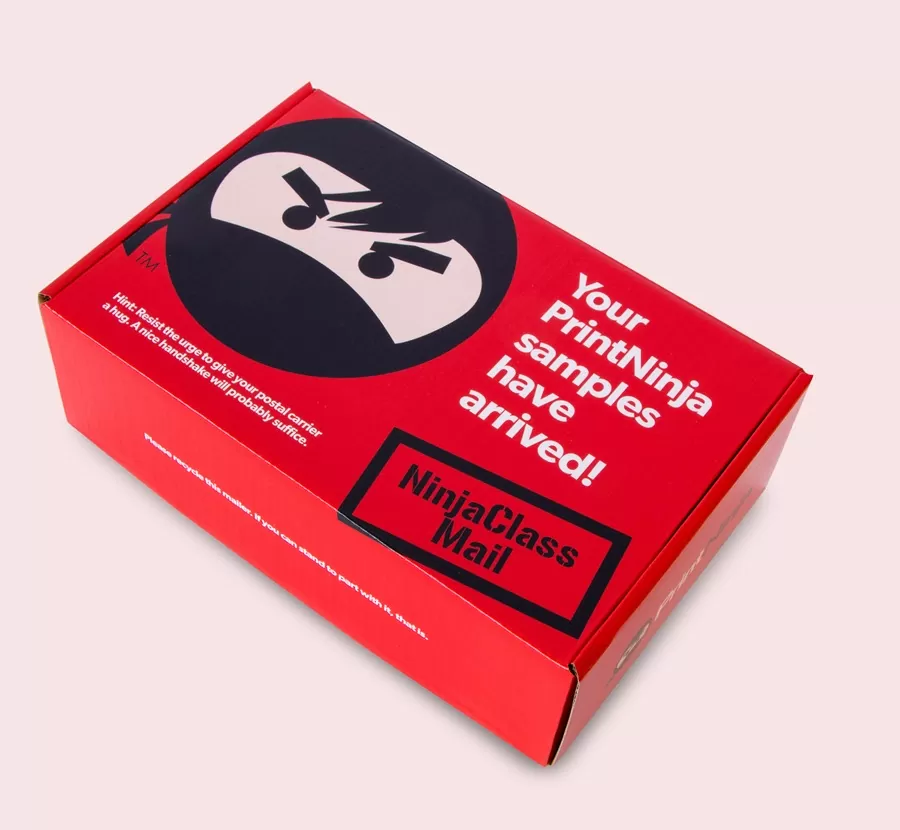
Order a Sample Pack to see our paper stocks, coatings, and finishing options in person. It's the best way to choose the right materials for your zine before placing an order.
The PrintNinja Standard Sample Pack includes:- Complete collection of our paper types
- Hands-on examples of paper coatings and finishes
- Printed samples of specialty add-ons
- Foil stamping color options
- Need-to-know file setup tips
- Walkthrough of our customer-friendly services